
Powering up your Home Office
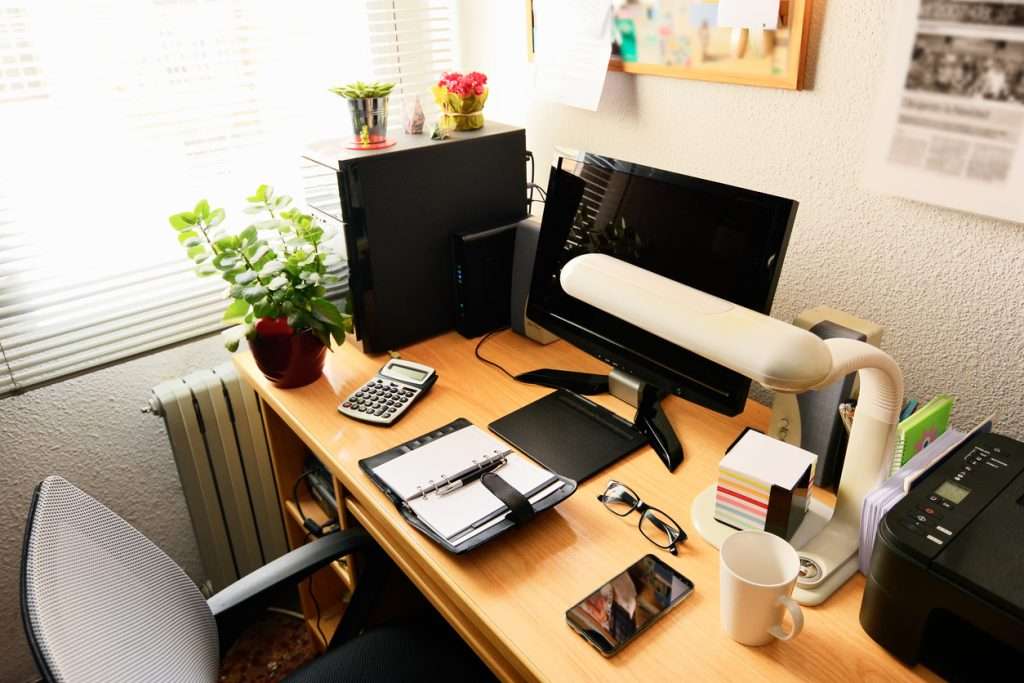
Working from home has changed the way many homeowners use their space. A spare bedroom becomes an office. A dining room becomes a workstation. A basement becomes a studio, meeting room, or second work zone.
If your office relies on a web of cords and overloaded outlets, your electrical system may be telling you something important: the space was not designed for maximum efficiency and safety.
Your home office may be using more power than you think
Individually, these items may seem small. Together, they can put more demand on a circuit than expected, especially in older homes where bedrooms, offices, and living areas may share the same circuit. That is often when homeowners start noticing small warning signs, including a breaker trips when the printer starts, lights flicker when a space heater turns on, a power strip feels warm or an outlet is hidden behind a desk and packed with plugs.
A typical setup may include:
- Laptop or desktop computer
- One or two monitors
- Printer or scanner
- Desk lamp or ring light
- Wi-Fi equipment
- Phone and tablet chargers
- Speakers or camera equipment
- Space heater, fan, or portable air purifier
- Shredder or other office equipment
Extension cords are temporary, not permanent wiring
Extension cords are useful for short-term needs. They are not meant to replace properly placed outlets or support a permanent home office setup. When cords are used every day, several problems can happen. They can become damaged under rugs, pinched behind furniture, or overloaded by equipment that draws more power than the cord is designed to handle. Power strips can also create a false sense of safety. They may give you more places to plug things in, but they do not increase the capacity of the circuit behind the wall.
If your home office relies on multiple power strips or extension cords, the better long-term solution may be adding outlets, improving outlet placement, or evaluating whether the circuit itself can support how the room is being used. Learn more here: What is Electrical Load and Why Does it Matter?
Watch for these home office electrical warning signs
Some electrical issues are obvious, like a breaker that keeps tripping. Others are easier to miss.
Pay attention if you notice:
- Breakers that trip when office equipment is running
- Lights that dim or flicker when devices turn on
- Outlets or power strips that feel warm
- Buzzing sounds from outlets, switches, or panels
- A burning smell near cords or outlets
- Plugs that fit loosely in outlets
- Cords running under rugs or furniture
- Multiple high-demand devices plugged into one power strip
- Frequent use of adapters because the room does not have enough outlets
One warning sign does not always mean there is a major problem. But it does mean the setup should be looked at more carefully, especially if the issue happens more than once.
Space heaters are one of the biggest home office culprits
In Seattle-area homes, home offices are often set up in rooms that were not originally designed to be used all day. Basements, converted bedrooms, and older additions can feel colder than the rest of the house. That leads to the portable space heater. However, space heaters draw a lot of power. When plugged into a crowded power strip or an already-loaded circuit, they can create a real safety concern. They should be plugged directly into a wall outlet, and they should not share power with a long list of other devices.
If you need a space heater every day to make your home office comfortable, it may be worth asking a bigger question: is the room set up properly for daily use? Sometimes the issue is electrical. Sometimes it is heating, insulation, or airflow. But from a power standpoint, a space heater should always be treated as a high-demand device.
Older homes may need a closer look
Many Seattle homes were built long before remote work, dual monitors, home printers, chargers, and video calls became part of daily life. Older homes may have fewer outlets per room. Some may still have ungrounded outlets. Others may have circuits that serve several rooms at once. Even homes that have been updated over time may have a mix of old and new wiring behind the walls.
If you are using a room in a new way, especially for full-time work, it is smart to make sure the electrical system supports that use. That does not always mean a major upgrade. Sometimes the right solution is as simple as adding properly placed outlets or separating certain loads. Other times, the panel, circuit layout, or wiring condition may need further evaluation.
Better outlet placement can make a big difference
A safe and functional home office does not need to be complicated. But it does need to be planned. The right outlet placement can reduce cord clutter, make the room safer, and help the space function better. For example, outlets may be needed near the desk, behind mounted monitors, near a printer station, or along a wall where equipment is used. In some cases, a dedicated circuit may make sense for certain equipment or a higher-demand setup.
This is especially helpful if you are remodeling, finishing a basement, converting a spare room, or creating a long-term work-from-home space. Electrical planning is much easier before furniture is placed, walls are finished, or the room is fully in use.
A safer home office starts with the circuit behind the outlet
It’s easy to focus on the cords, plugs, devices, and power strips because that’s what we can see. But it’s important to understand what’s happening behind the outlet. Is the circuit overloaded? Is the outlet grounded? Is the wiring in good condition? Are too many rooms or devices sharing the same circuit? Is the breaker doing its job, or is it tripping because the demand is too high?
These are the questions a licensed electrician can help answer. A home office should support your workday without creating ongoing electrical concerns. If your setup only works because of extension cords and power strips, it may be time to make the space safer and more functional.
When to call an electrician
Consider having your home office evaluated if:
- You work from home regularly
- You rely on extension cords or power strips every day
- Your breaker trips more than once
- You use a space heater in the room
- Your outlets feel warm or loose
- Your home is older and has limited outlets
- You are planning to remodel or convert a room into an office
- You want to add outlets, improve placement, or reduce cord clutter
Electrical improvements do not have to be major to make a meaningful difference. Sometimes the best upgrade is the one that makes your everyday space safer, cleaner, and easier to use.
Make your home office work as hard as you do
Your home office should help you focus, not make you worry about overloaded outlets or cords running across the floor.
If your current setup feels temporary, crowded, or unreliable, Exact Electric can help evaluate your home office electrical needs and recommend next steps. From adding outlets to reviewing circuit capacity, we can help make sure your workspace is set up safely for the way you live and work today. Contact us today and let us know what you are working on.
Sign up for Empowering Electrical News
We won't share your information
Recent Posts






Get in Touch
"*" indicates required fields