
17 Questions Homeowners Ask (or Should Ask) Their Electrician

17 Questions Homeowners Ask (or Should Ask) Their Electrician
Whether you’re living in a century-old Seattle Craftsman or a newer build on the Eastside of Puget Sound, your home’s electrical system plays a bigger role than you may realize. From safety concerns to future planning, the best way to stay ahead is to ask good questions and get clear, trusted answers.
Here are the most common questions homeowners ask, or should ask, their electrician:
1. Why are my lights flickering?
This is often a sign of overloaded circuits, loose wiring, or an aging breaker. If it happens when appliances kick on, it could mean your panel is near capacity.
2. Why does my breaker keep tripping?
Frequent trips usually point to a circuit overload, a short, or a ground fault. Resetting may work temporarily, but persistent tripping means it’s time to investigate further.
3. Why is my outlet or light switch warm to the touch?
A warm outlet or switch can indicate a loose connection or an overloaded circuit. If it’s hot, stop using it and call an electrician. This could be a fire risk.
4. Why does my outlet spark when I plug something in?
Sparking can be a sign of worn-out wiring, a short, or a loose connection inside the outlet. Occasional static isn’t unusual, but anything more deserves attention.
5. What is a GFCI outlet, and where do I need one?
GFCIs (Ground Fault Circuit Interrupters) cut power instantly if they detect an electrical imbalance. They’re required anywhere water and electricity could mix, such as kitchens, bathrooms, laundry rooms, garages, basements, and outdoors.
6. What is an AFCI, and do I need one?
An Arc-Fault Circuit Interrupter helps prevent electrical fires by detecting dangerous arcing. They’re required in many parts of the home, especially bedrooms and living areas, under modern code.
7. How old is my electrical panel, and when should I replace it?
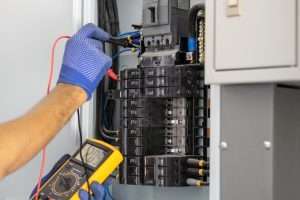
Most panels last 25–40 years. If yours is older, has fuses, or can’t support today’s energy loads, it may be time for an upgrade, especially if you’re adding an EV charger or you are remodeling your home. Is your panel safe or does it need to be replaced – learn more.
8. Do I need a whole-house surge protector?
Yes, especially if you have sensitive electronics, EV chargers, or live in an area prone to power fluctuations. Whole-house protection defends everything plugged into your home, not just what’s on a power strip.
9. Is it safe to use extension cords long-term?
No. Extension cords are for temporary use only. Regular or hidden use under rugs, or for heavy-duty appliances, is a serious fire risk. Install a dedicated outlet instead.
10. Can I do electrical work myself?
You can replace bulbs or even light switches if you’re careful. But installing new wiring, upgrading panels, or adding circuits should always be left to a licensed electrician to protect your home and comply with code.
11. What’s the difference between a fuse and a breaker?
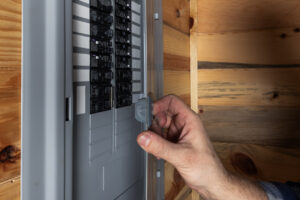
Fuses blow and need replacement. Breakers trip and can be reset. Fuses and breakers are like safety switches for your house and are reside in your electrical panel. Both protect against overload, but breakers are safer, easier, and more common in modern homes. A fuse is like a one-time-use safety (when it “blows,” you have to replace it with a new one.) A breaker is like a reusable switch (when it “trips,” you just flip it back on).
12. Can I plug my space heater or AC into a power strip?
Never. High-draw appliances like heaters, air conditioners, or refrigerators should always plug directly into the wall. Power strips can overheat or fail under heavy load.
13. What should I do if my electrical panel is sparking?
Turn off power immediately and call a licensed electrician. Arcing, popping, or heat from your panel signals a major safety issue that requires urgent attention.
14. Should I unplug appliances during a storm?
Unplug small electronics and appliances to protect them from potential surges. Larger appliances on dedicated circuits are generally protected, but a surge protector adds peace of mind. Check out these tips to Get Storm Ready.
15. Can I label my panel myself?
Yes. And it’s a smart move. Use a circuit tracer or plug-in tester to identify and label each circuit clearly. It makes future work faster and safer for you and your electrician.
16. Do I need a permit or inspection for my project?
Most projects involving wiring, new circuits, or panel work require a permit and inspection, especially in Seattle and King County. This ensures your system is safe and up to code.
17. Can I pre-wire for future upgrades during a remodel?
Absolutely. If you’re considering EV chargers, smart home tech, solar, or future additions, it’s far easier and more affordable to install conduit, boxes, or subpanels during your remodel even if you’re not using them right away. Check out these five electrical upgrades to consider during a remodel.
Asking the right questions leads to better decisions, fewer surprises, and safer, future-ready systems. We recommend that you ask your electrician these questions before starting work.
We’re here to help you ask and answer and questions you have. Contact us today!
Sign up for Empowering Electrical News
We won't share your information
Recent Posts





Get in Touch
"*" indicates required fields