
What Your Home’s Wiring Says About Its History
Your home’s wiring tells a story of the past. In the Greater Seattle area, many homes offer lots of character and carry electrical histories hidden behind walls and ceilings. Whether your house was built in the 1920s or the early 2000s, the type of wiring it has can reveal when it was built, what codes were in place at the time, and what safety concerns to look out for.
We help homeowners understand what’s behind their walls and what needs to change to ensure safety, compliance, and long-term reliability. Here’s what your home’s electrical system might be telling you.
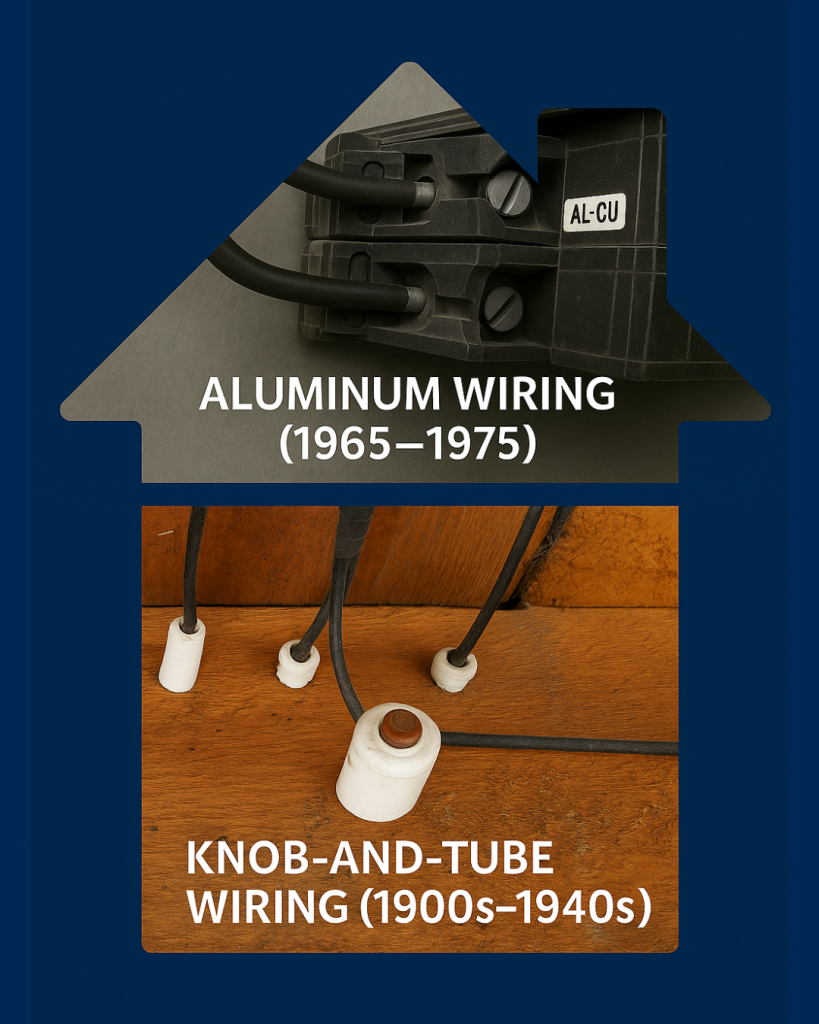
Knob-and-Tube Wiring (1900s–1940s)
What it is:
This early method uses ceramic knobs to support wires and tubes to protect them as they pass through framing. It has no grounding wire, which increases the risk of shock and fire.
What it tells you:
Your home is likely over 80 years old and has had at least partial renovations. If knob-and-tube is still active, it’s a signal that your electrical system may be outdated and possibly unsafe.
What to do:
Replace wiring, especially if you’re using modern appliances, adding insulation, or planning a remodel. Learn more about why it’s time to replace knob and tube wiring.
Cloth-Insulated Wiring (1940s–1960s)
What it is:
Wiring wrapped in fabric insulation, sometimes coated with tar or rubber. Over time, it becomes brittle and deteriorates.
What it tells you:
Your home was likely built post-WWII, during Seattle’s mid-century growth. While once considered modern, cloth insulation is now a hazard due to heat sensitivity and insulation breakdown.
What to do:
Have it evaluated. Even if it still functions, it’s likely time for a rewiring project.
Aluminum Wiring (1965–1975)
What it is:
A temporary substitute for copper during shortages in the late 1960s. Aluminum expands and contracts more than copper, leading to loose connections and increased fire risk.
What it tells you:
Your home may have been built or rewired during this narrow decade’s window. Homes with aluminum branch circuits require extra attention and possibly retrofitting.
What to do:
If you see aluminum wiring marked “AL” or “ALUMINUM,” call a licensed electrician. Safe retrofitting options are available, but ongoing monitoring is critical. Learn more about why aluminum wiring is a hidden hazard.
Non-Metallic (NM) Sheathed Cable — AKA Romex® (1970s–Today)
What it is:
The standard in modern wiring: insulated copper wires in a flexible plastic sheath. Includes a ground wire for safety.
What it tells you:
Your home is likely newer or has had recent electrical work. This type of wiring is reliable and meets current code when installed properly.
What to do:
Ensure any visible NM cable is installed neatly and protected from damage. If you’re adding circuits or new fixtures, this is the material your electrician will likely use.
A Mix of Old and New? That’s Common in Seattle
It’s not unusual to find knob-and-tube in the attic, cloth wiring in the walls, and modern NM in the kitchen. Many homes in our region were updated in phases, sometimes DIY, sometimes not to code.
Why Wiring Matters
Outdated or degraded wiring is inefficient and it can be dangerous. Electrical fires, overloaded circuits, and lack of grounding are all real risks. And for homeowners planning upgrades like EV chargers, heat pumps, or solar, a sound electrical foundation is essential.
Not sure what kind of wiring your home has?
Schedule a home wiring evaluation with our licensed electricians. We’ll walk you through exactly what you’re working with and help you plan for what’s next.
Sign up for Empowering Electrical News
We won't share your information
Recent Posts




Get in Touch
"*" indicates required fields